
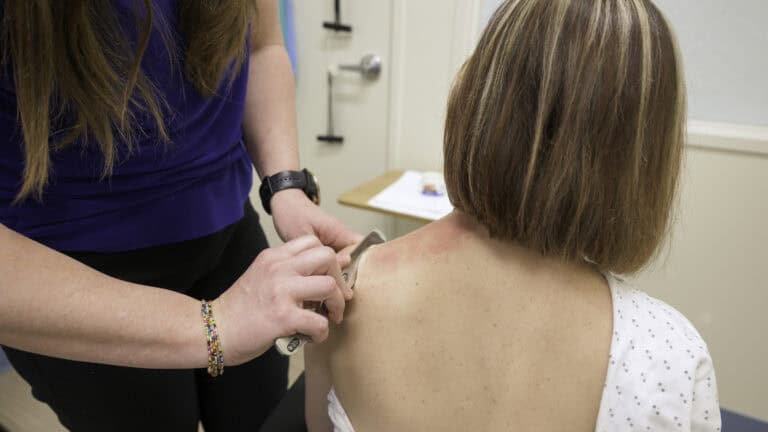
Graston Technique (GT)
Graston Technique is an evidence-based form of myofascial release therapy that uses instruments in order for therapists to address soft tissue lesions (scar tissue) and fascial restrictions. During your session, there may be some discomfort but the instruments should not cause intense pain. Slight bruising to the area may occur but it does not need to bruise or cause pain to be effective.
Active Release Technique (ART)
Active Release Technique is a non-invasive myofascial therapy system precisely engineered to locate and quickly resolve soft-tissue disorders. ART utilizes the therapist’s hands to identify abnormal tissue texture, tension and movement. Once the therapist identifies the condition, they use a specific ART protocol combining precise touch with specific patient movements. This will restore proper soft tissue function and relieve pain. There are no known side effects of ART and most conditions are resolved in five or fewer treatment sessions.
Joint Mobilization
Joint mobilization is the careful use of varying levels of force to move a joint in a desired direction. It is specific to the capsule of the joint. Gliding of the joint is used to normalize function and improve motion, which assists with controlling/improving pain. When a joint’s mobility is limited, the function and structure of the surrounding region can change. For example, other joints may try to compensate for the effected joint. Muscles surrounding the stiff joint may lose their ability to contract and relax causing them to tighten. During treatment, you may hear a “pop” sound as the joint capsule is released. This can be intimidating but it is usually a sign of relief and success of the movement.